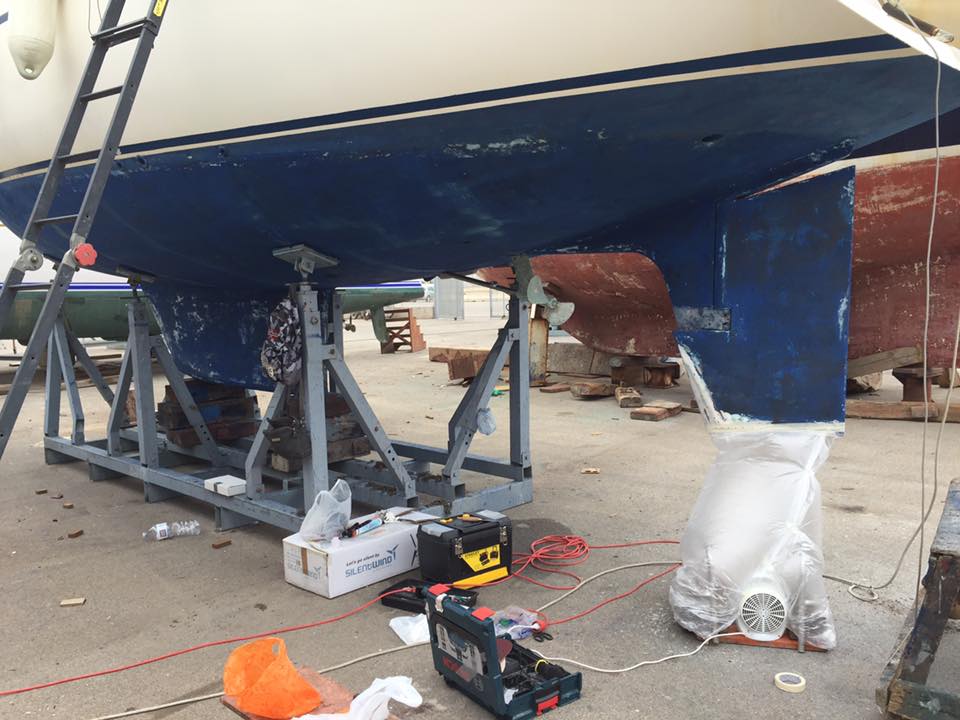
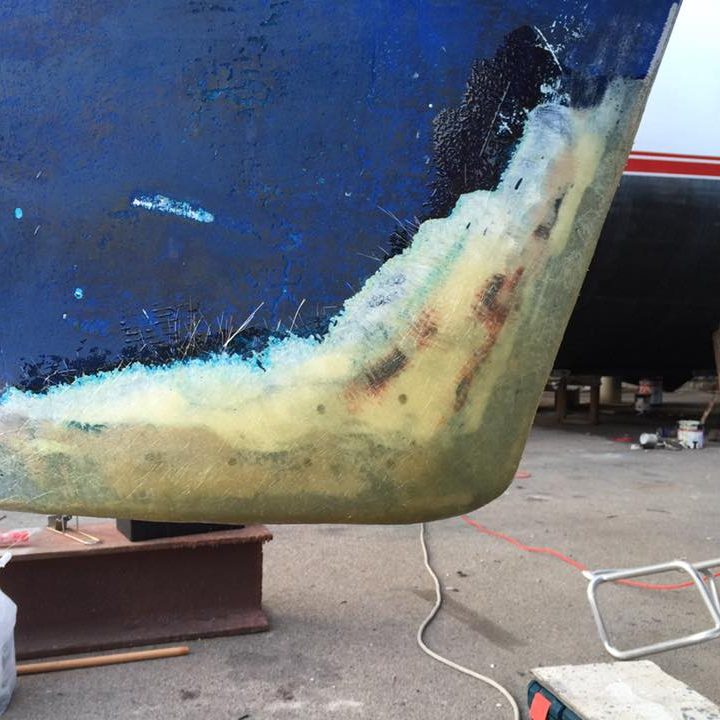
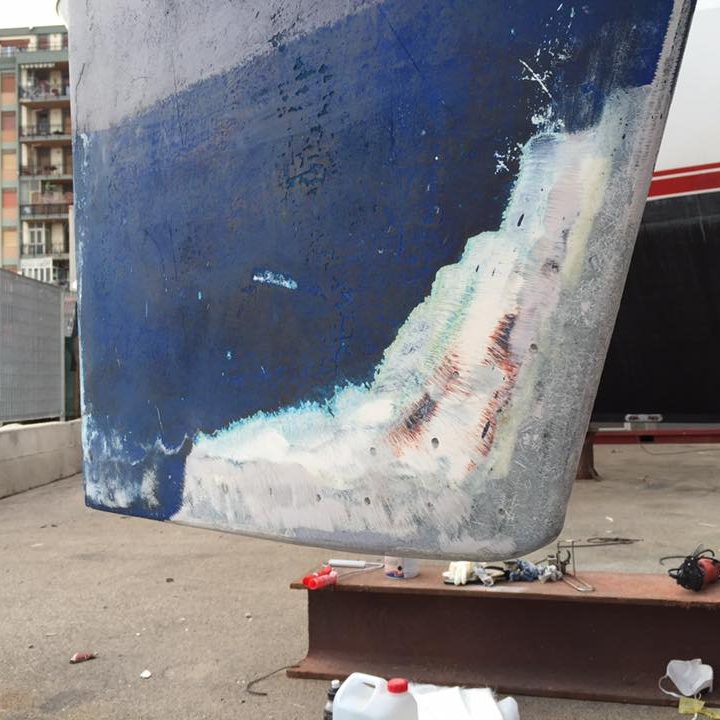
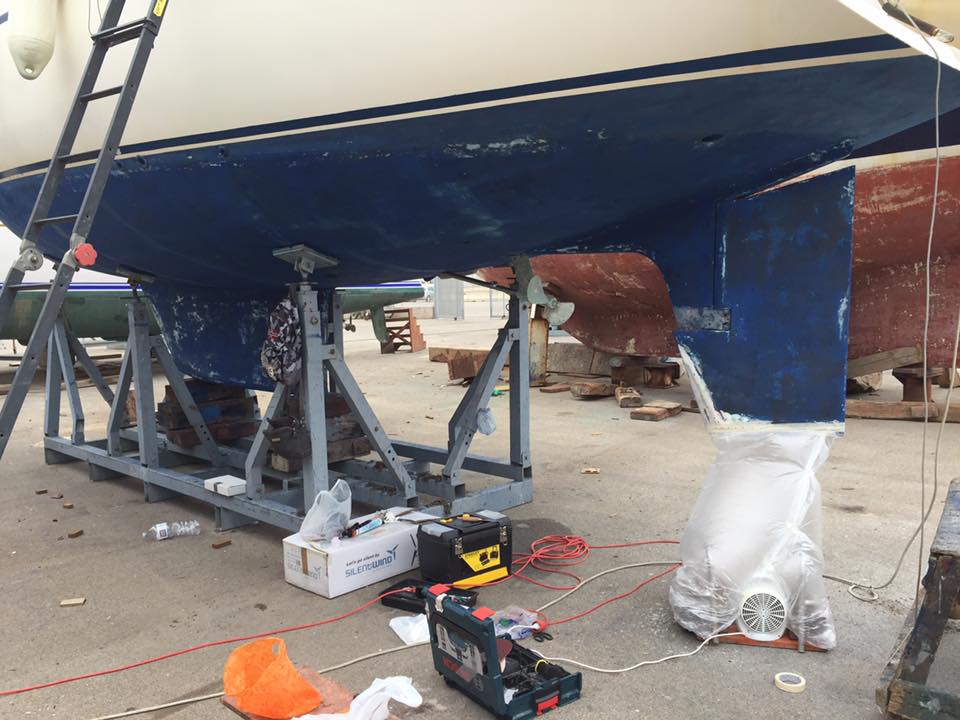
The bottom of this rudder was grounded and required some heavy structural repair. What made the project interesting is that we only had a very limited timeframe to conduct it.
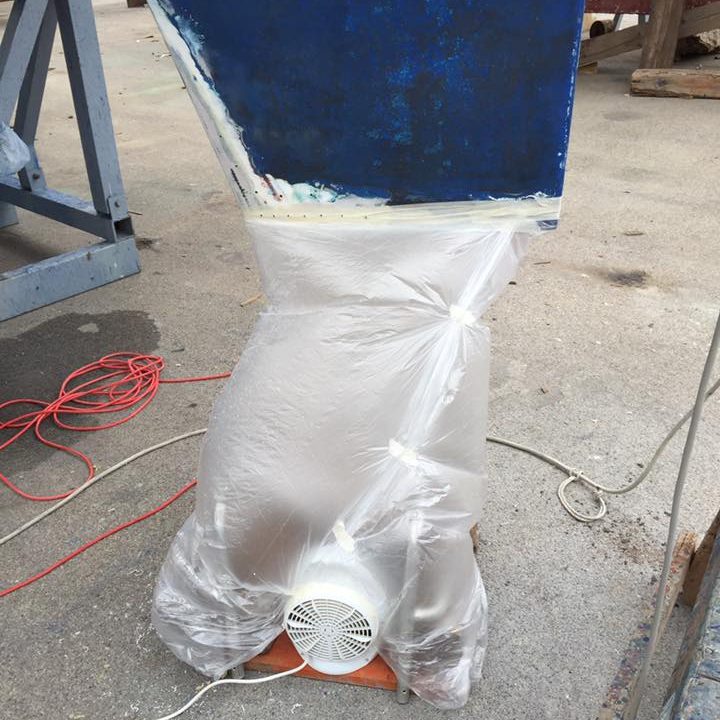
So we came up with a solution to reduce the duration of the whole operation, and we could put back the boat in the water on the day the owner requested.
We made a small installation with an electric blower, and this saved one day on the hard, while in a time-sensitive repair.
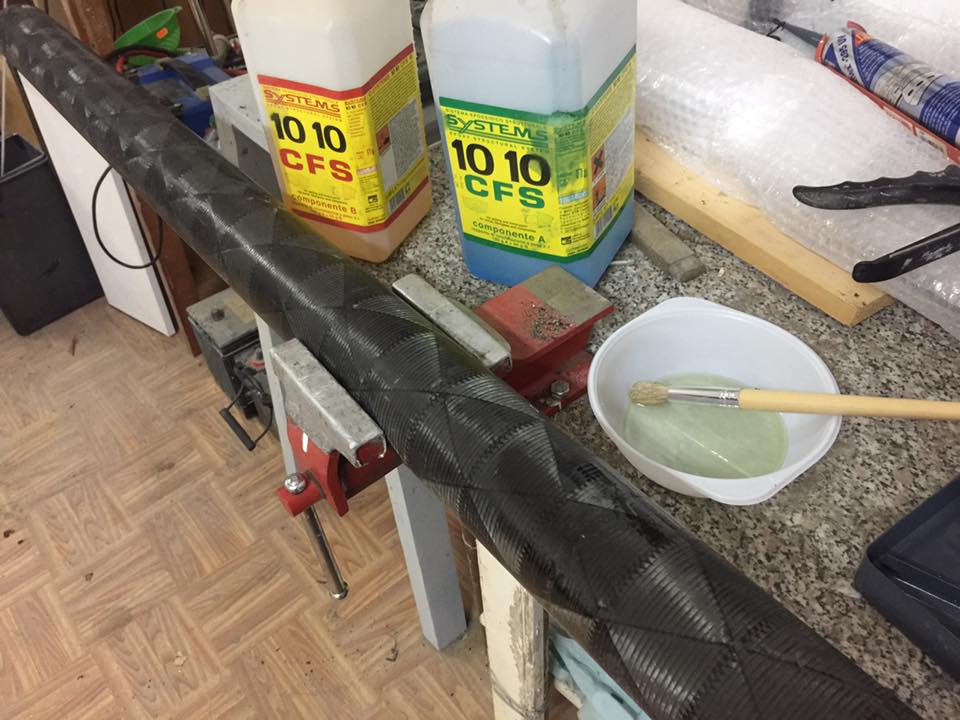
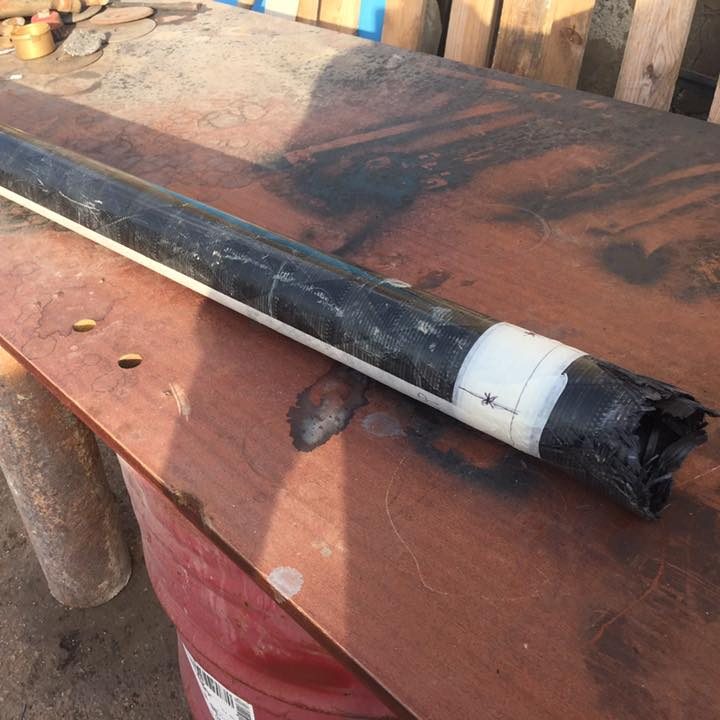
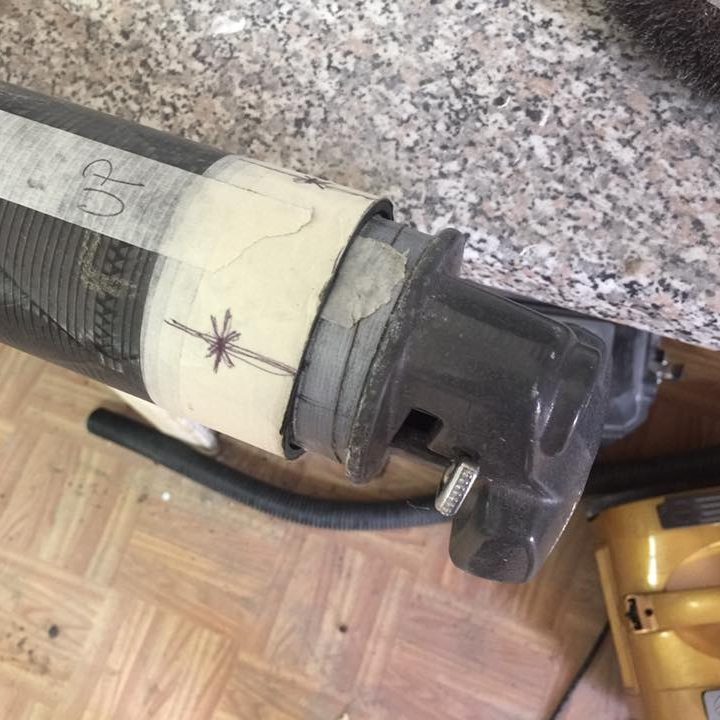
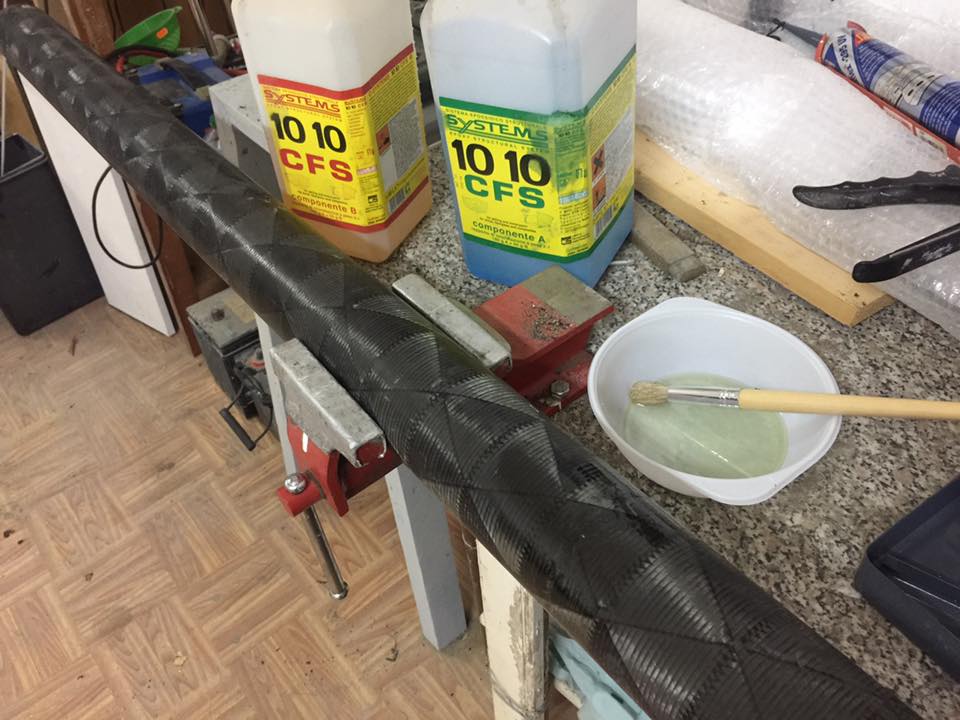
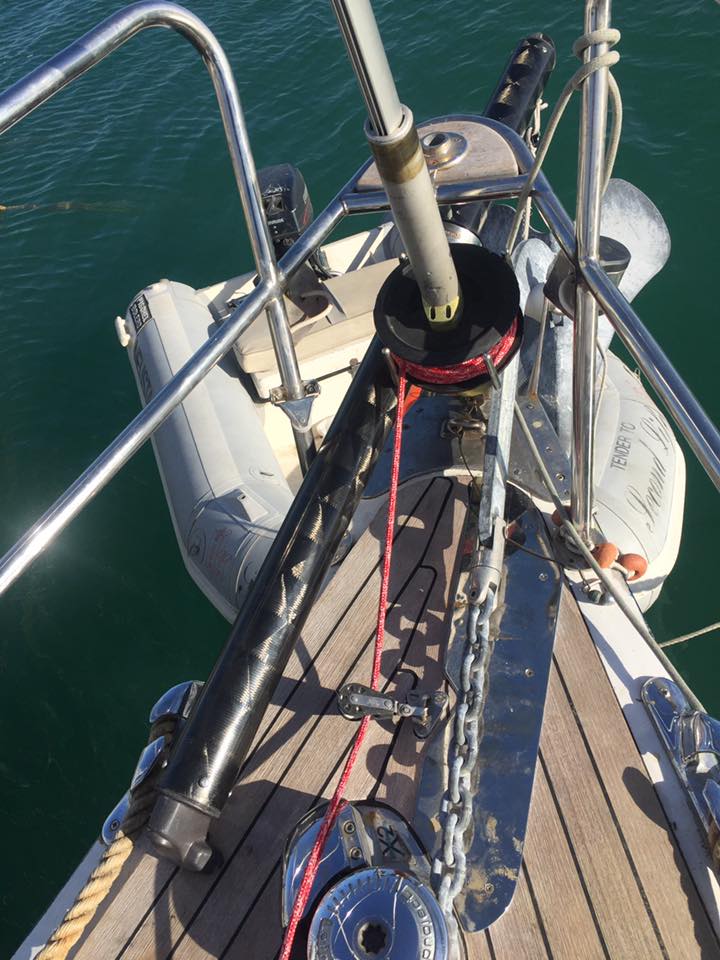
The carbon outrigger of this client broke on one end. He could no longer fit his Gennaker sail, and didn’t know if he should change the whole pole (quite an expensive one, as it was full carbon), or try a repair.
We convinced him we could work out a solution which would keep the structural strength, and its original integrity.
Last task left was to reinstall the outrigger in its rightful position.
This project started like we would easily get done with it. But this was without accounting for the legendary maintenance-driven conception of modern catamarans (spoiler alert: we’re usually disappointed at the way the mass-production yards would skip the necessary thoughts on maintenance).
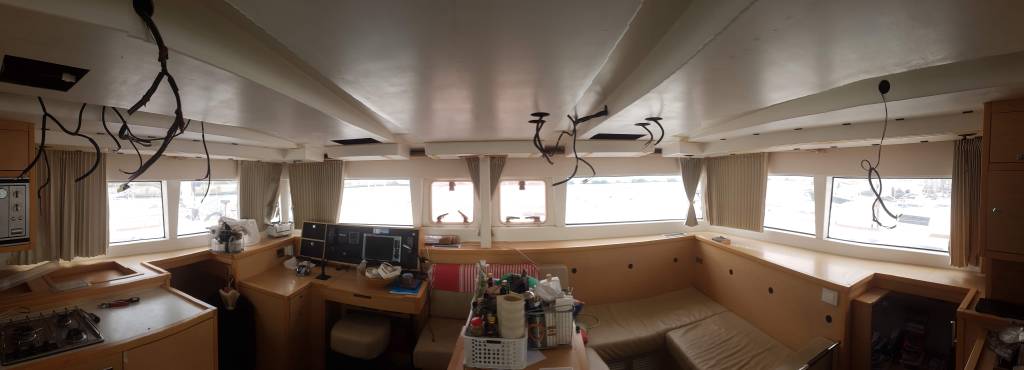
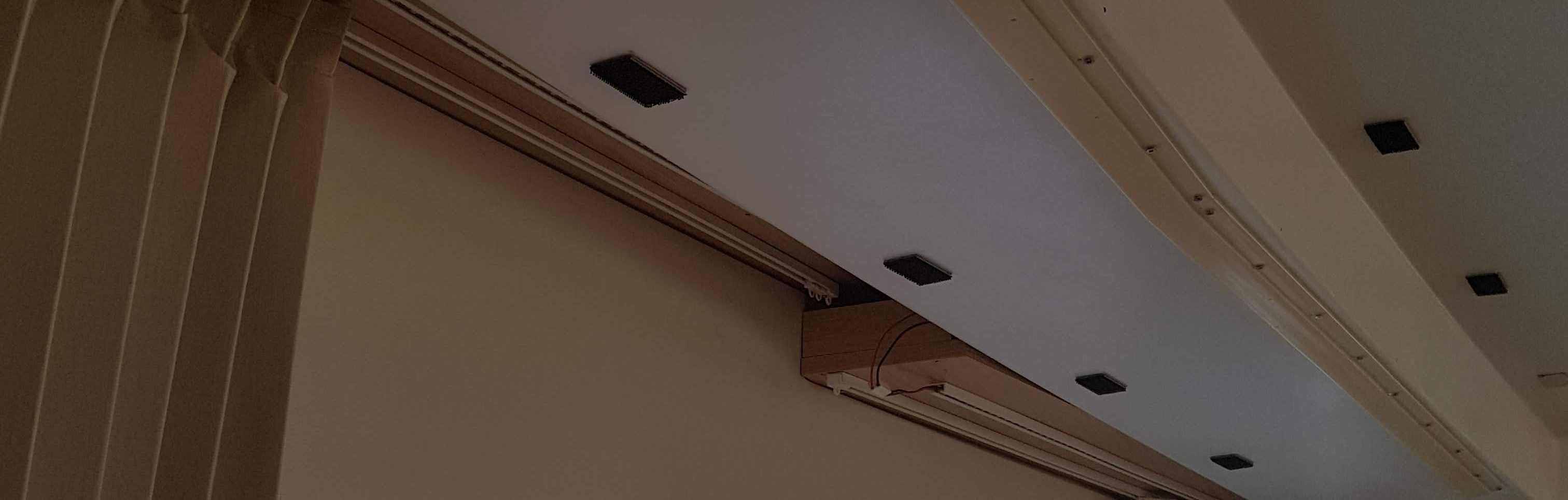
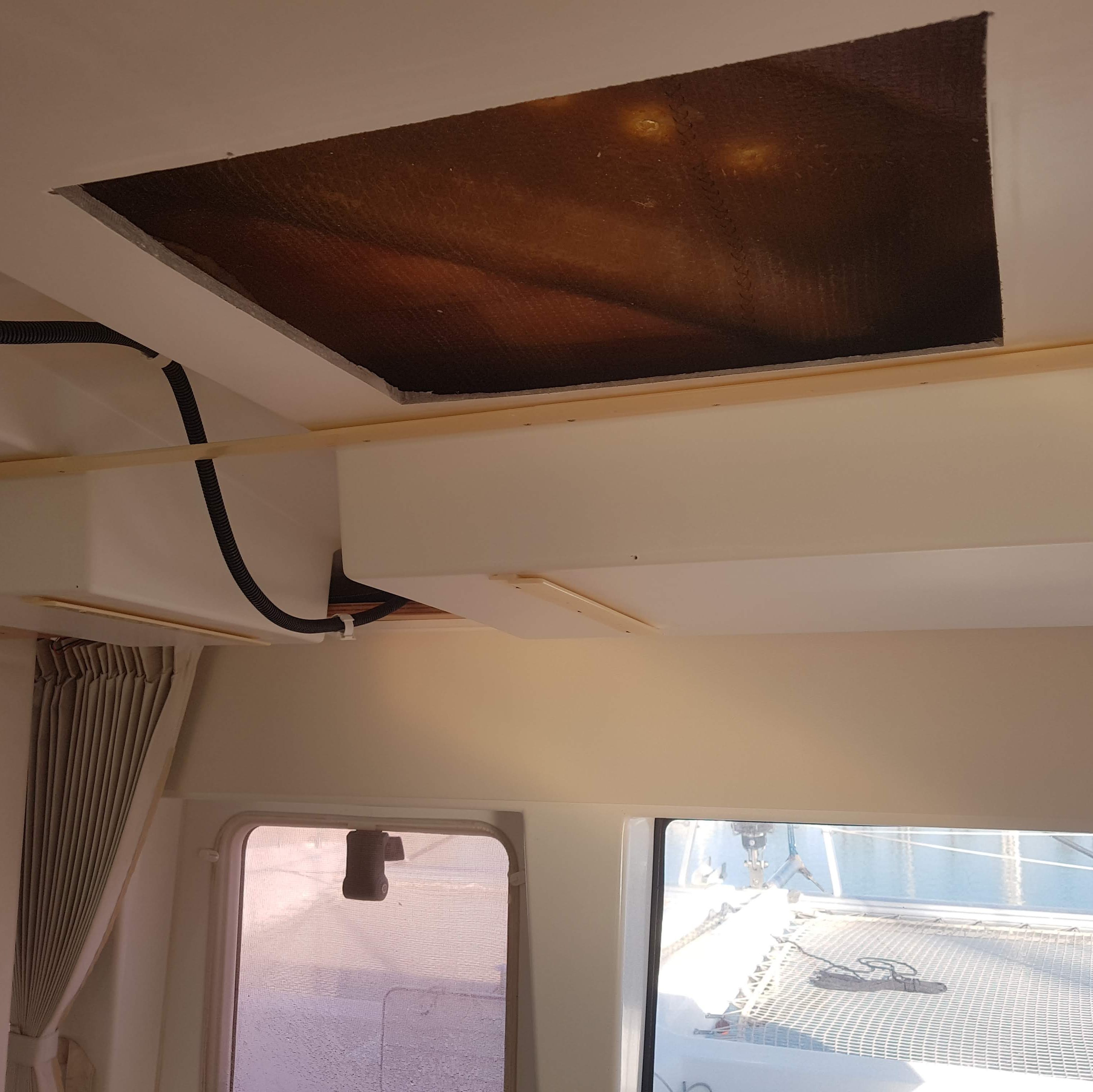
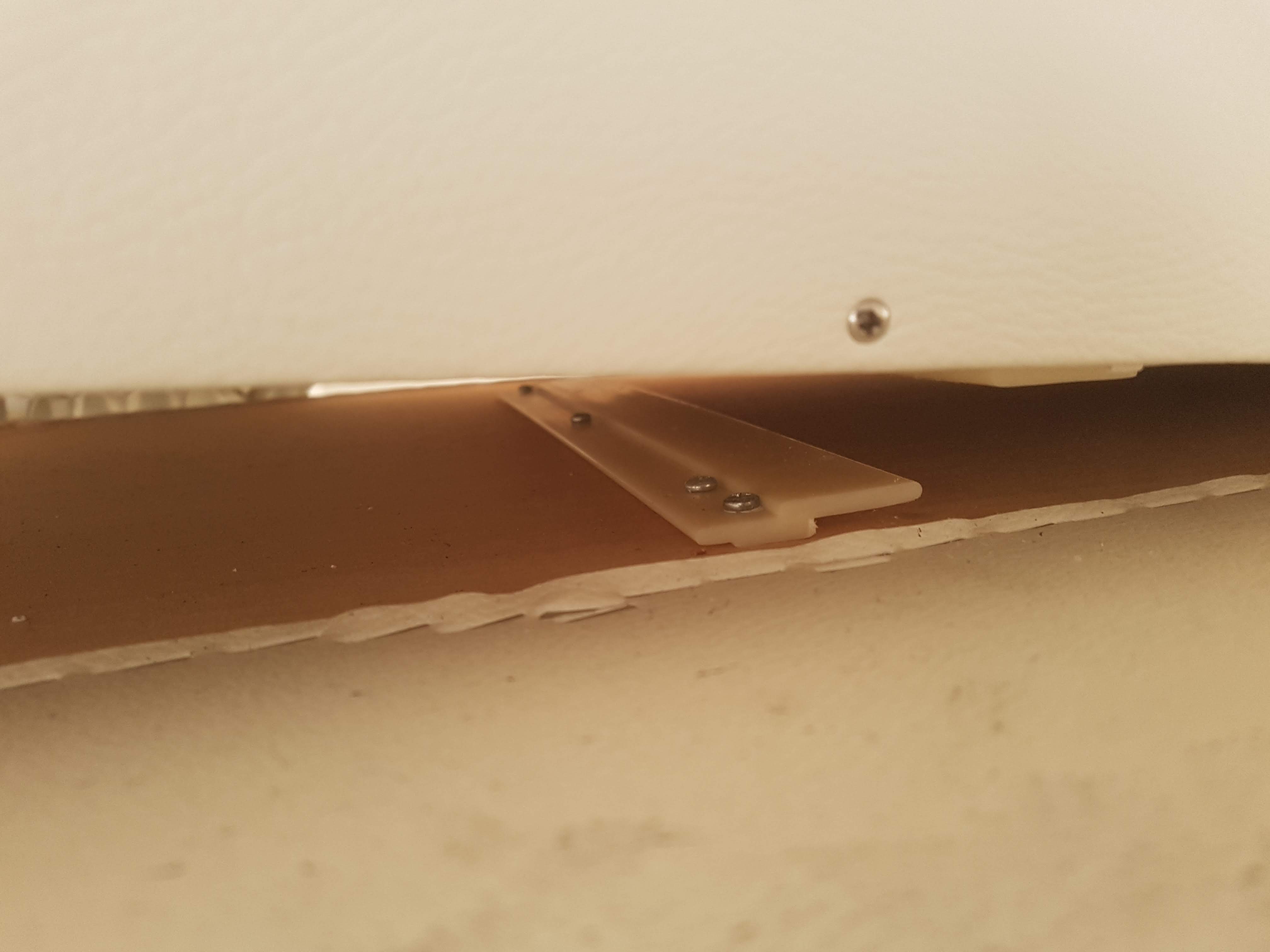
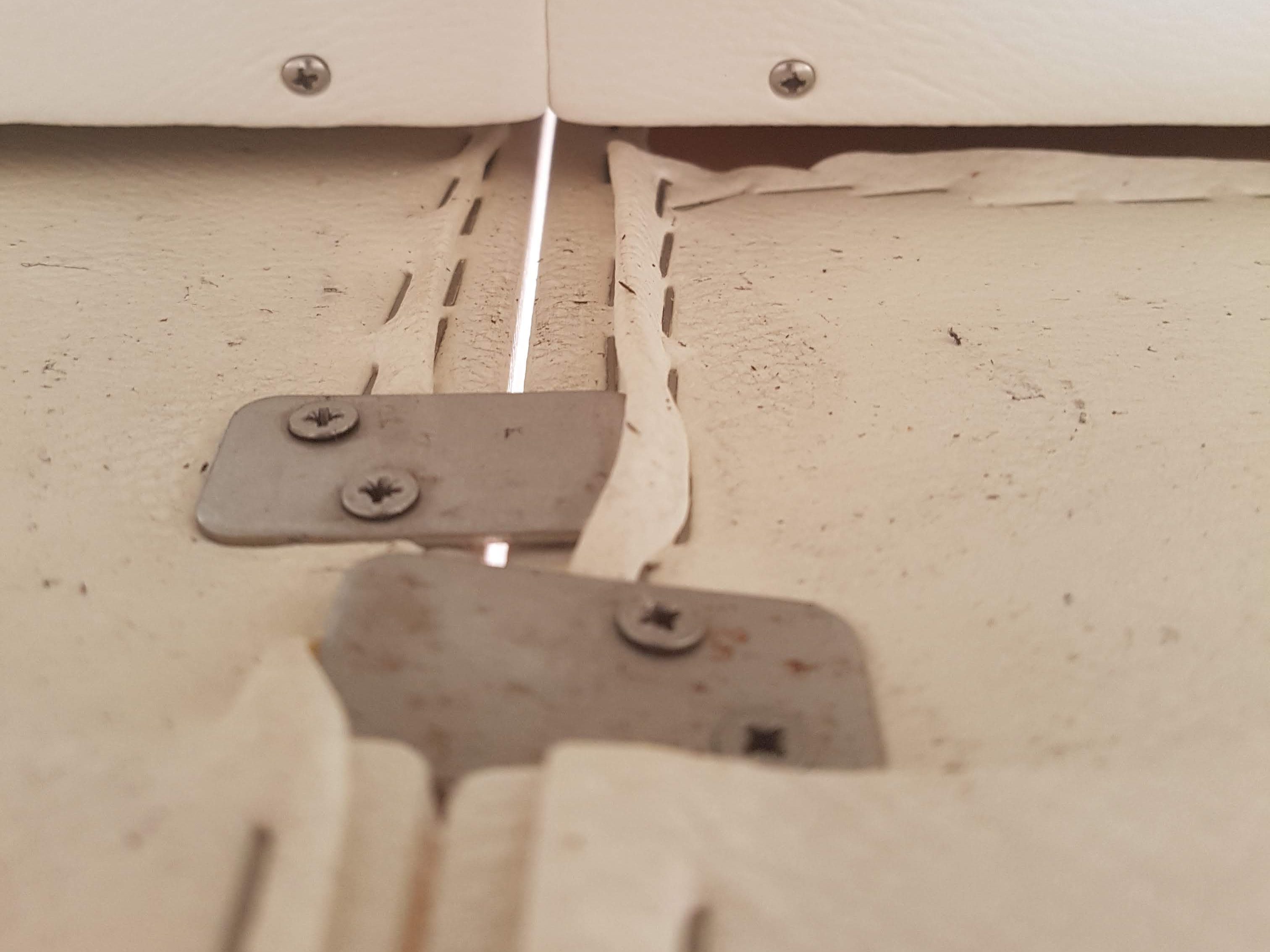
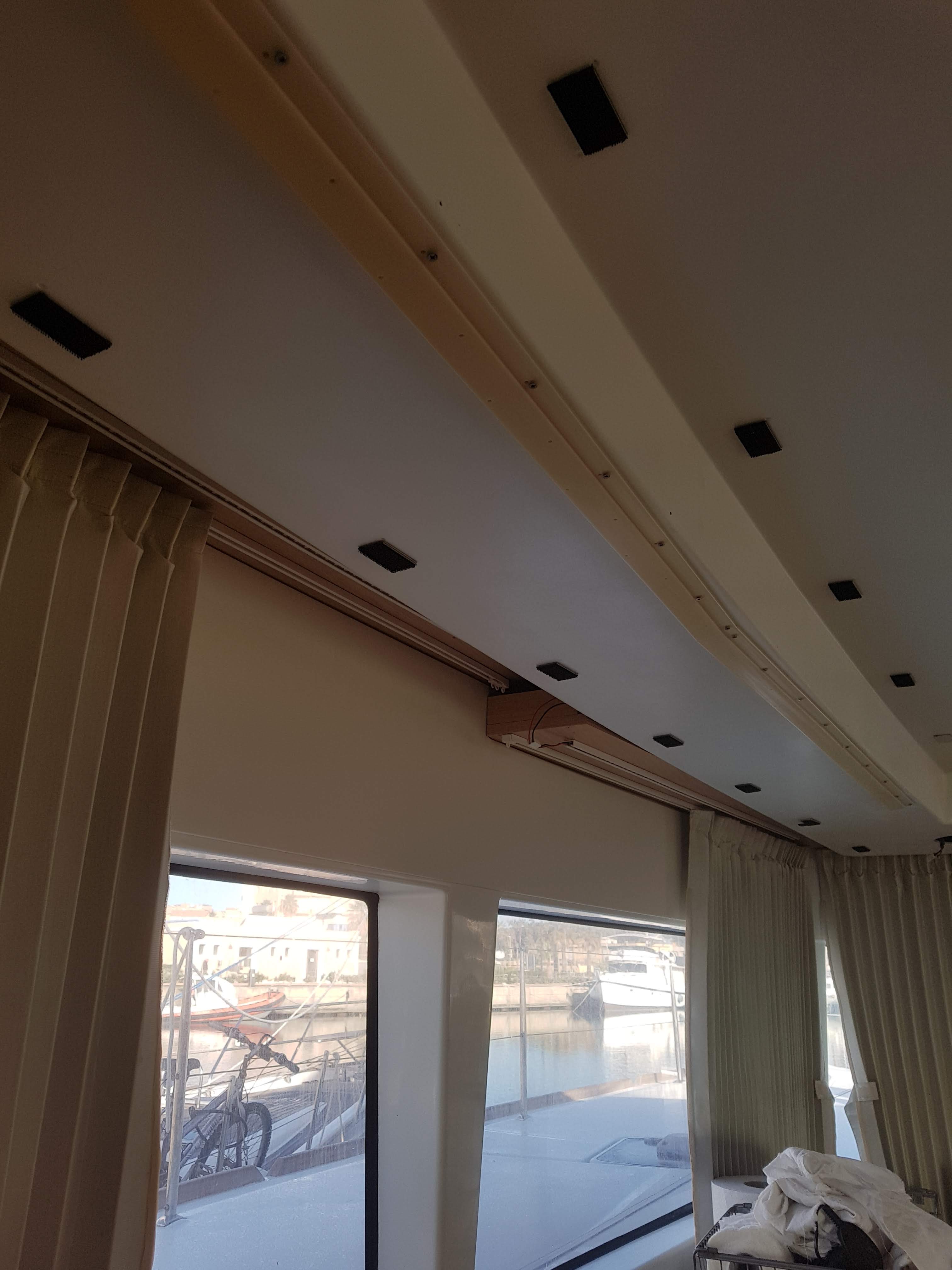
We soon realized that accessing the bolts of the coach-roof deck organizer would imply dismounting all the ceiling parts of this Lagoon 450F. This task alone required three hours, being very careful not to dent the various pieces in the process, dismounting first the ceiling-attached Bose speakers.
We share with you some photo of this first step, as it is not often that the ceiling of a Lagoon 450 is taken down.
First dismounting the roof covers
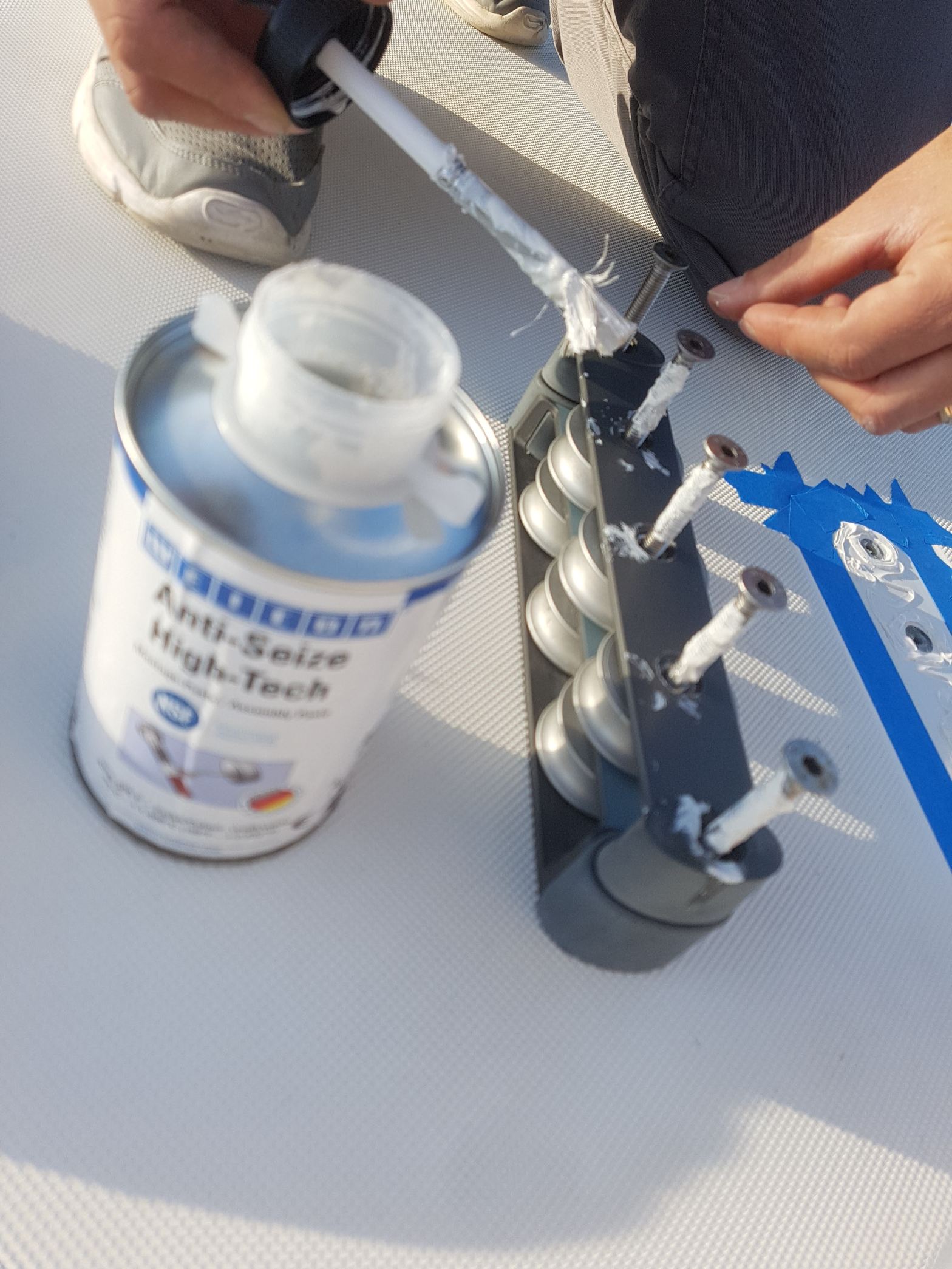
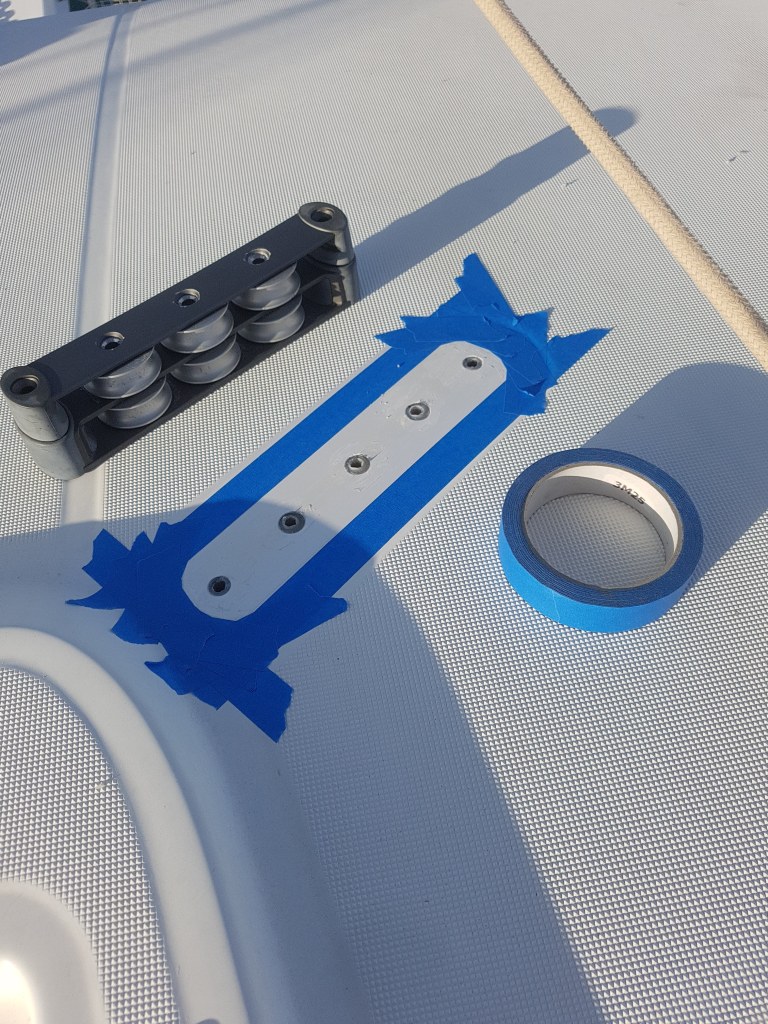
Cleaning & remounting the deck organizer
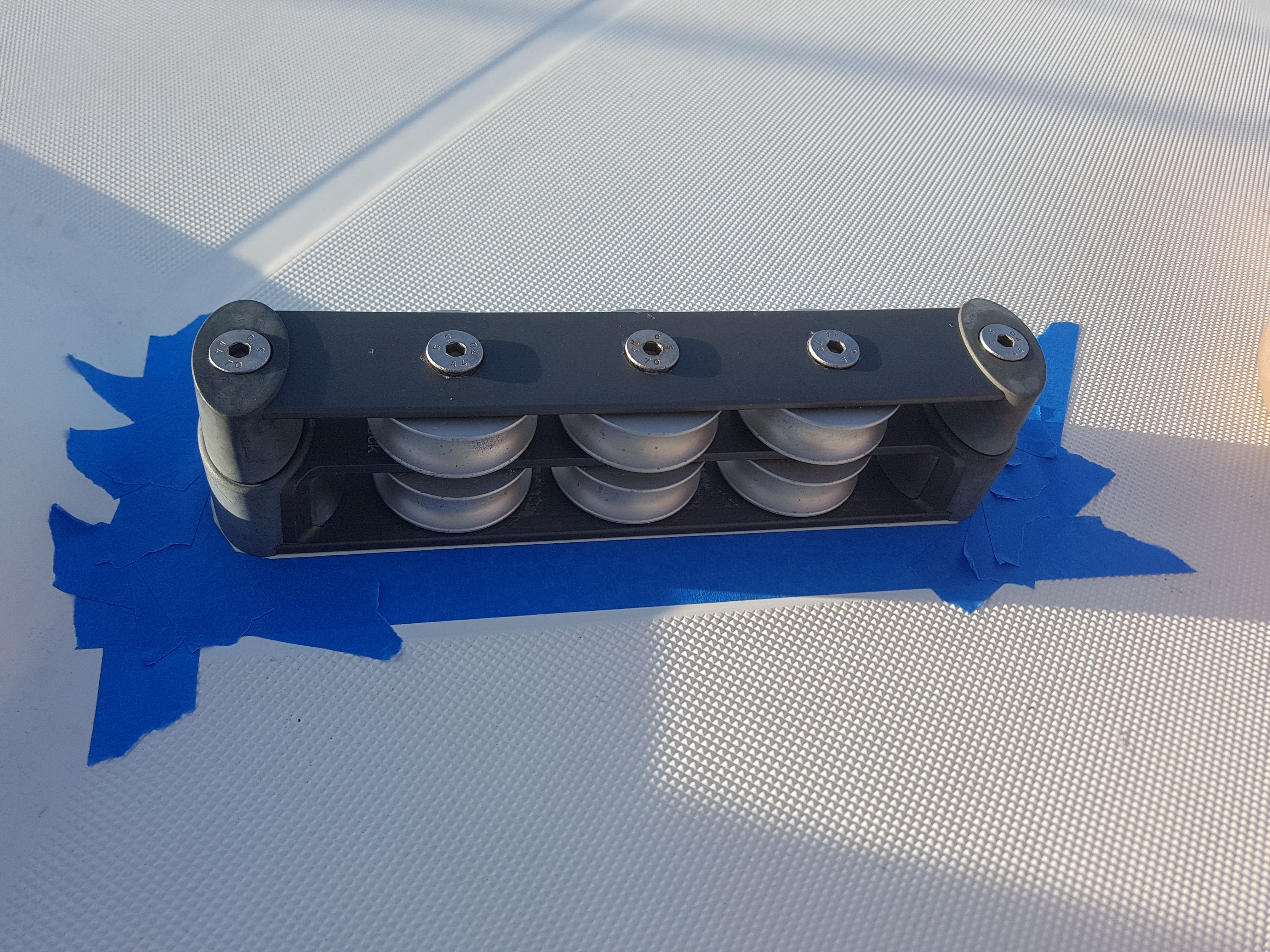
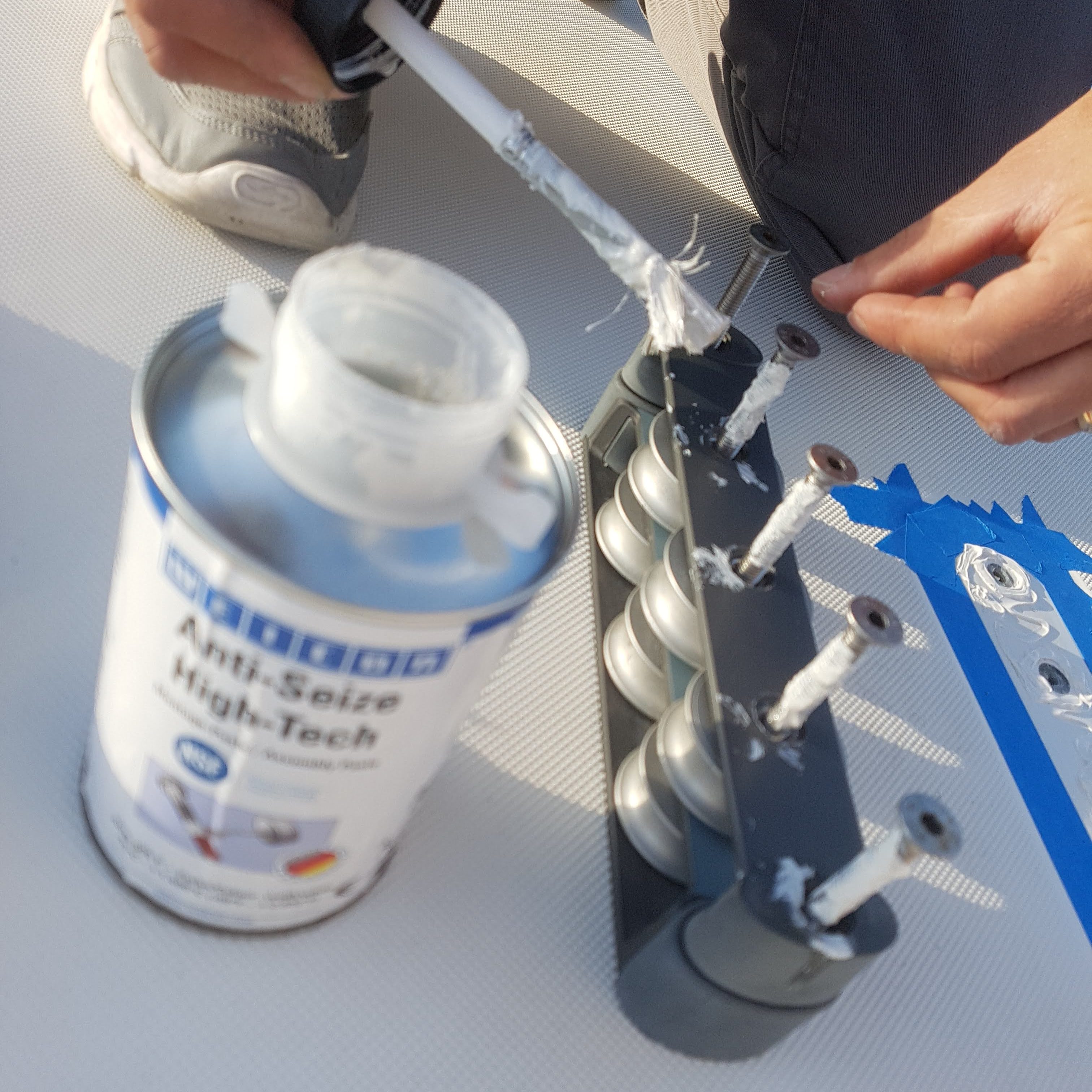
Then the real work could begin, first totally dismounting the deck organizer, bearings and all, cleaning them thoroughly in a petrol solution, and then bolting it back onto the roof of the catamaran.
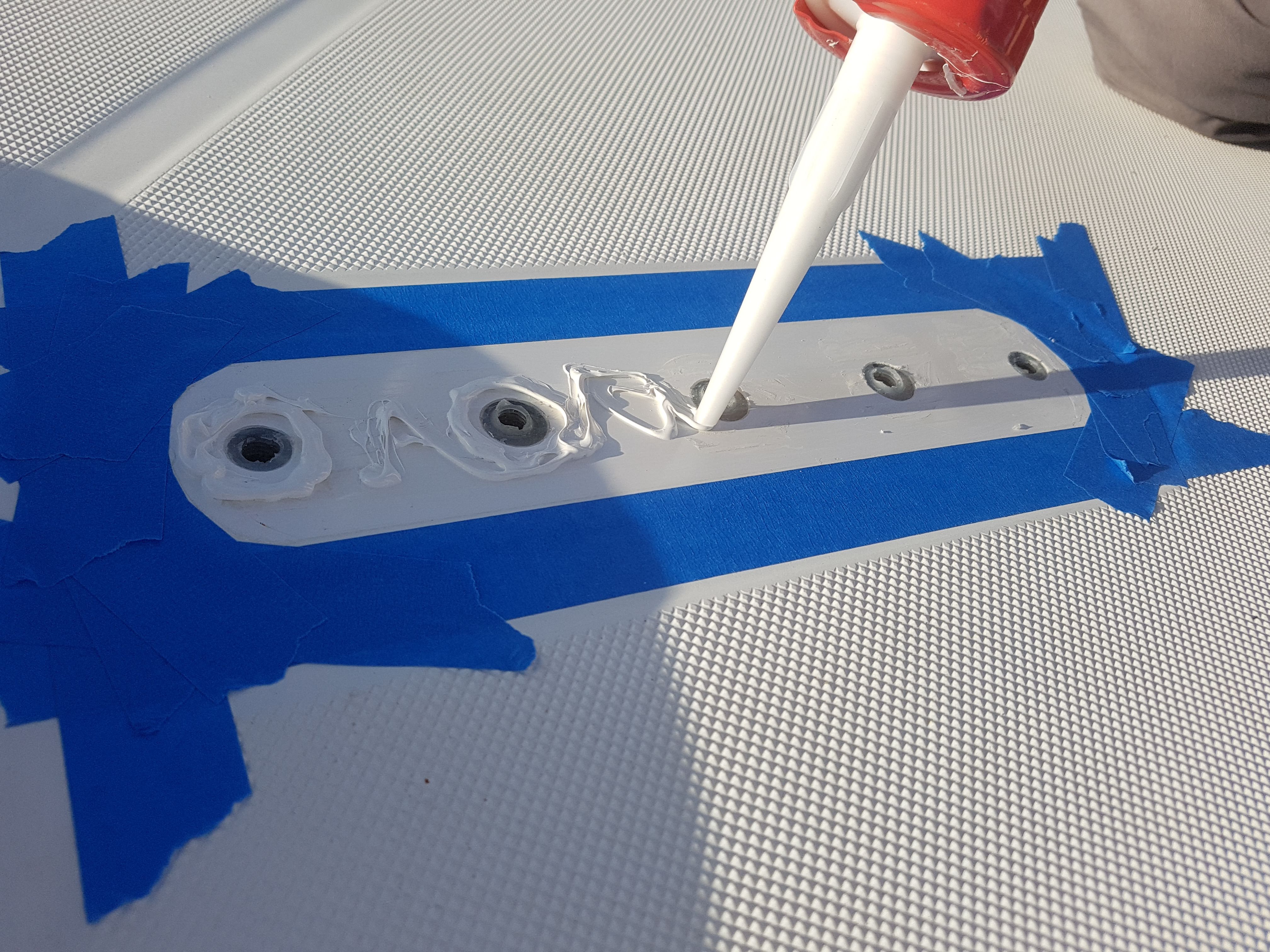
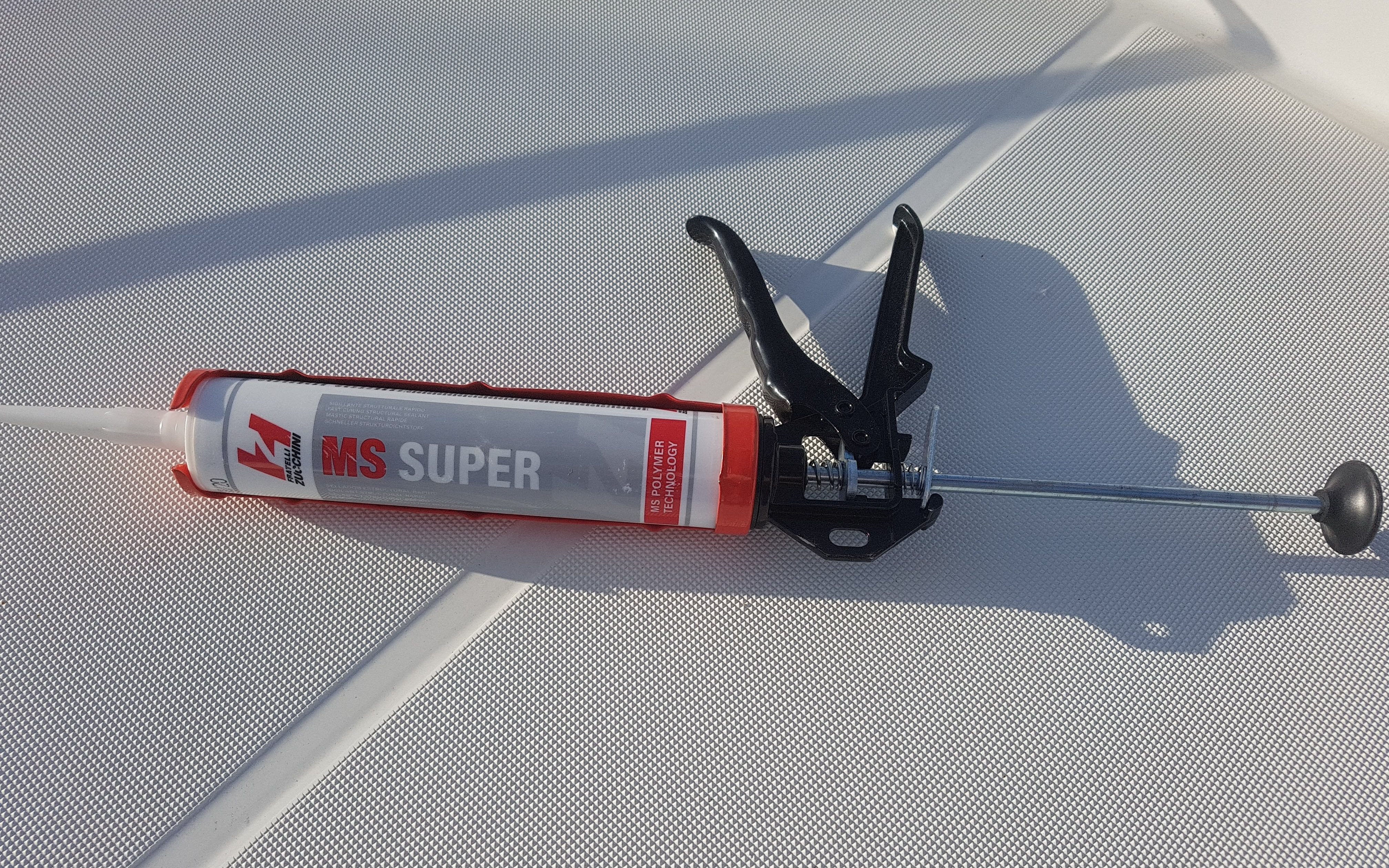
We don’t usually advertise the products we use, but in this instance we thought we would share the MS Superglue polymer from Fratelli Zucchini (“Permanent elasticity and flexibility combined with excellent adhesion to a great variety of surfaces and with a high cohesion make MS SUPER suitable for making high-performance seals and elastic joints. Reduced skin-forming time, rapid progression of the curing from the surface towards the inside of the joint and oven paintability at high temperatures make MS SUPER the ideal sealant for coachwork and metal construction.“)
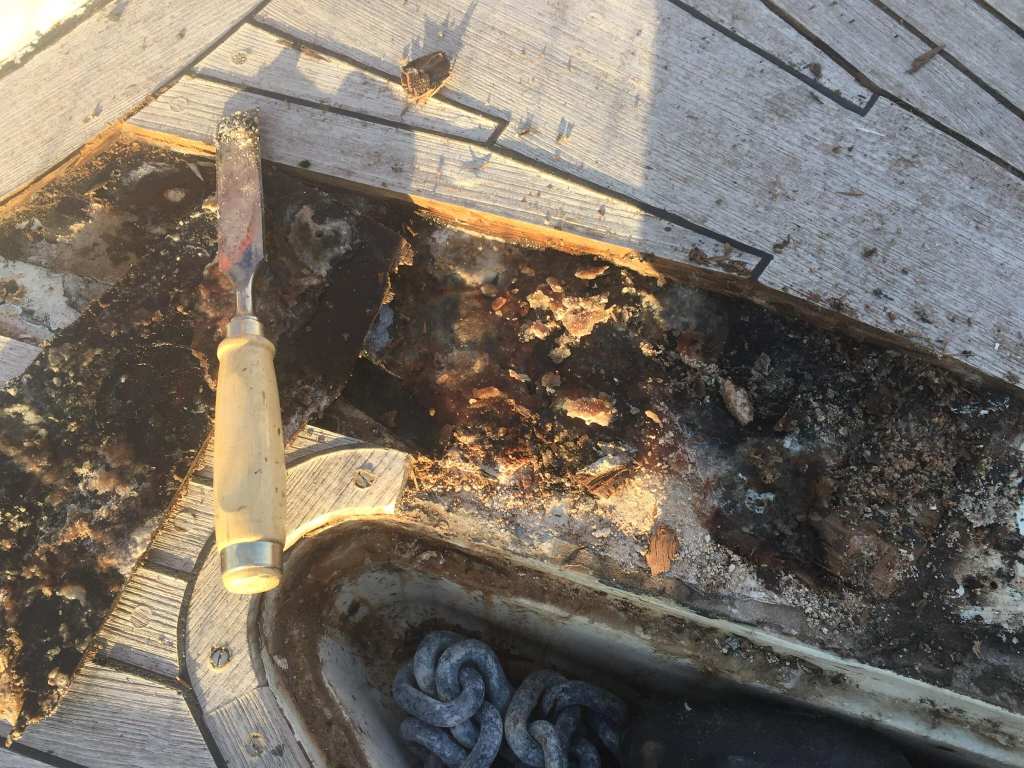
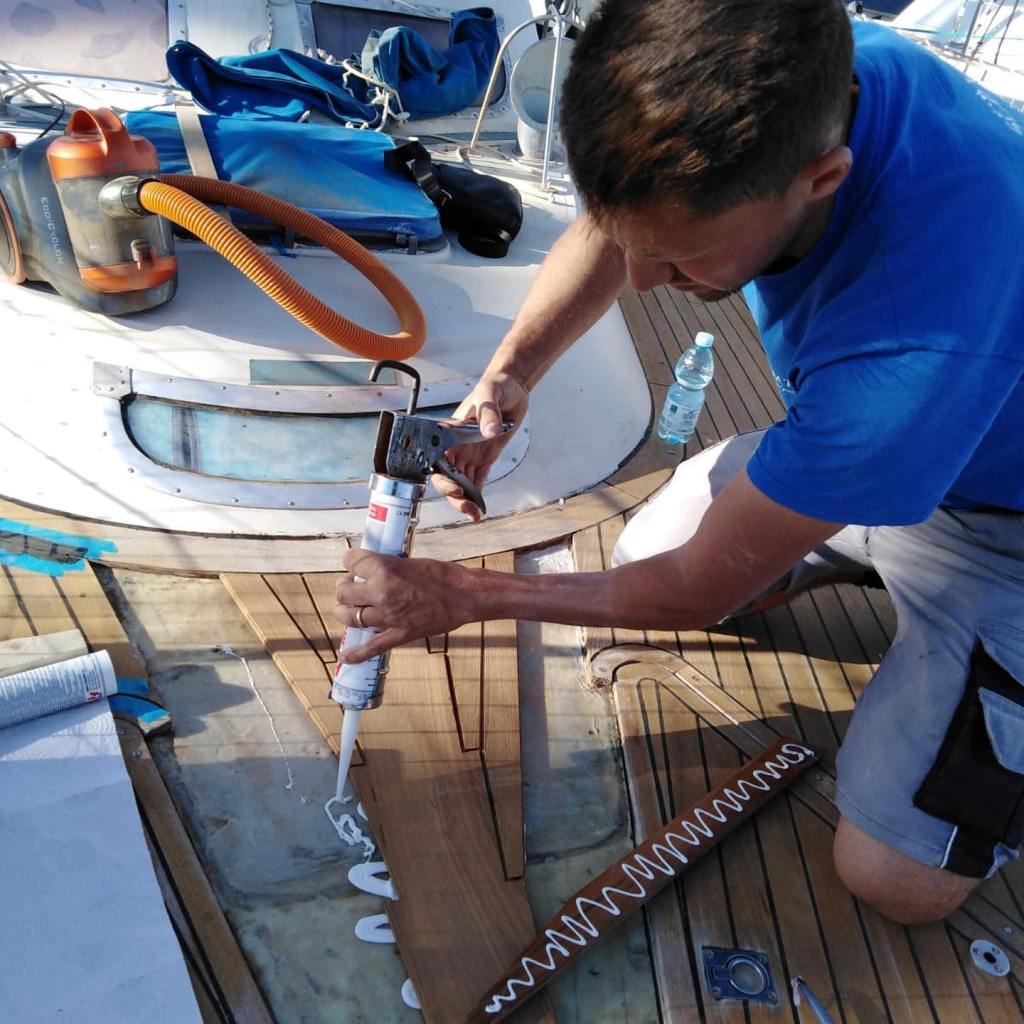
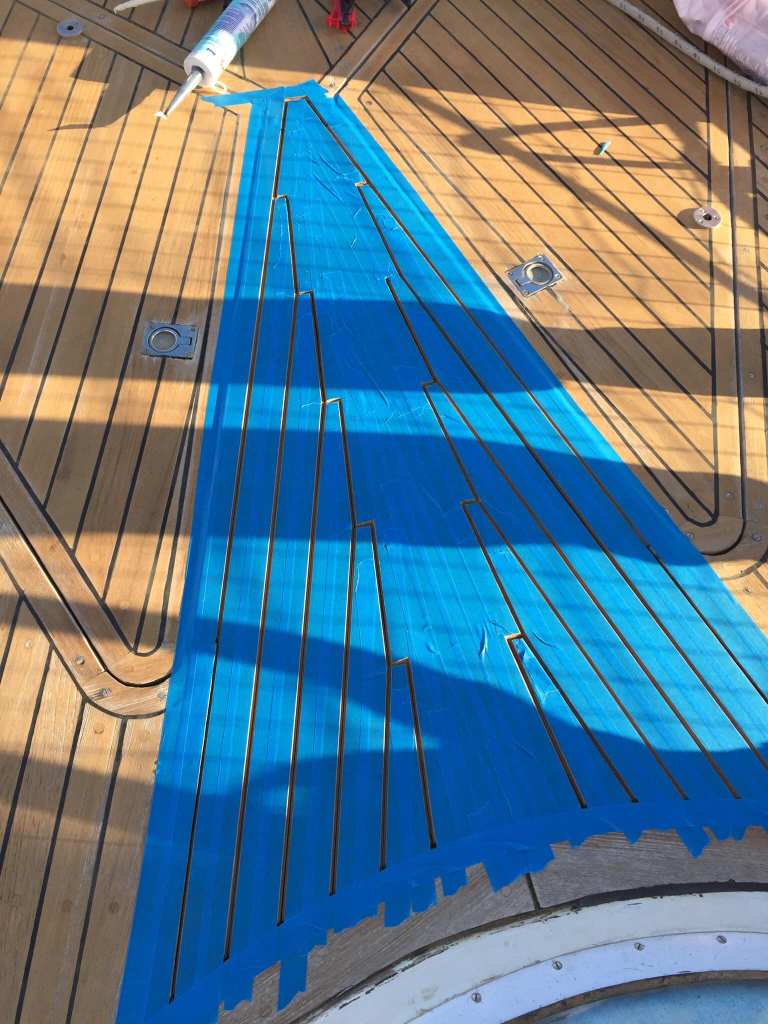
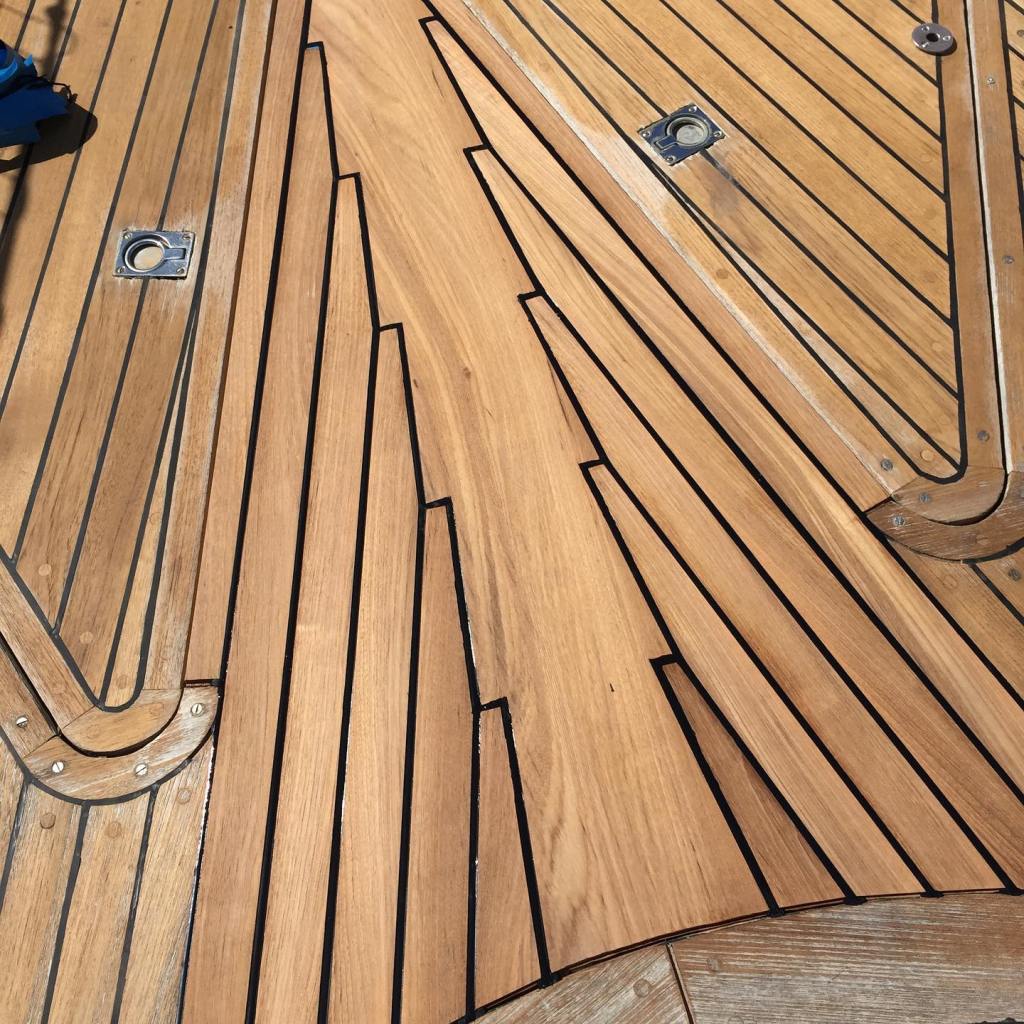
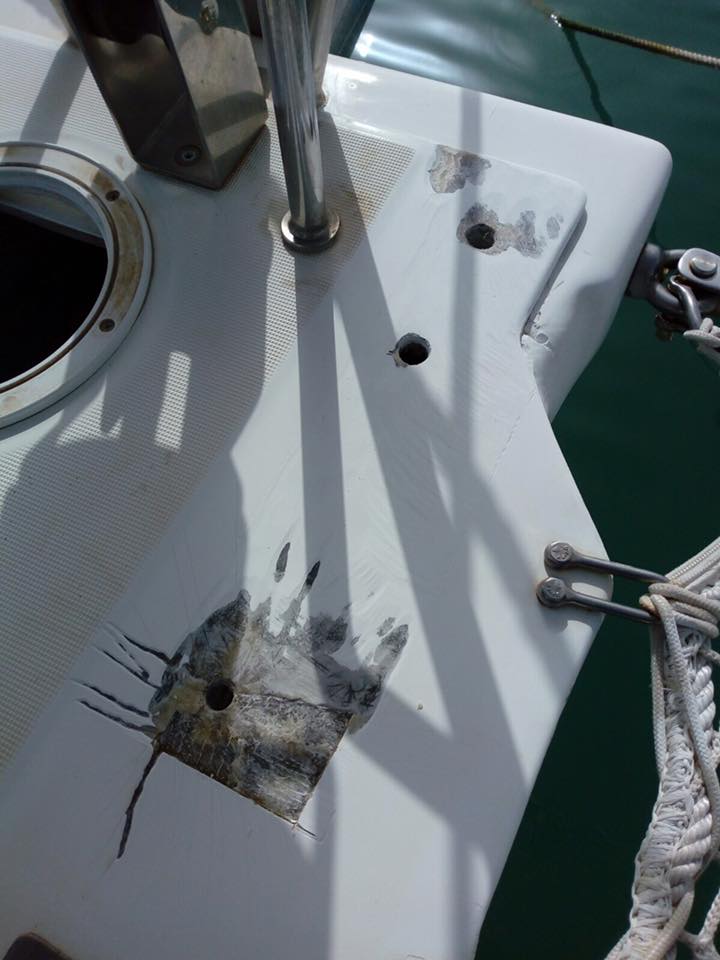
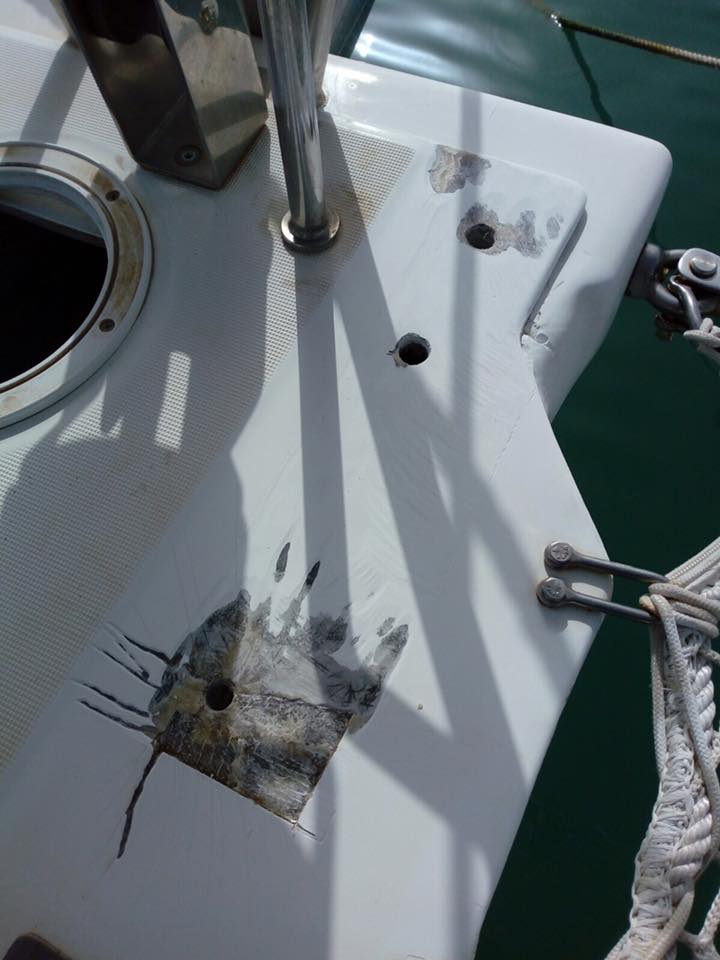
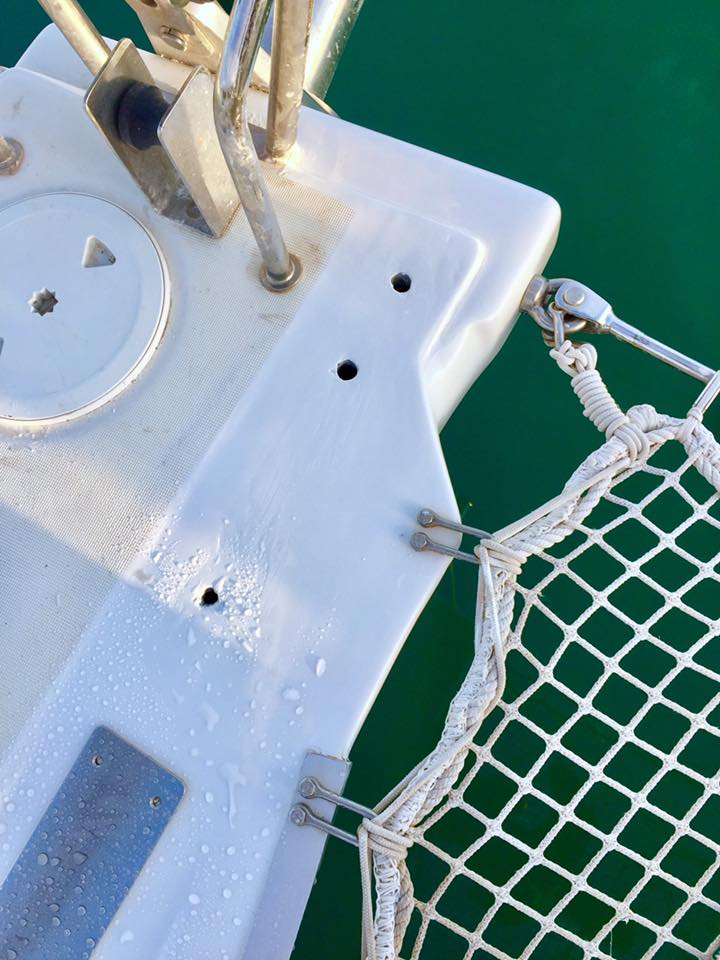
The front deck of this classic yacht had known better times. On checking it out for the owner, it was quite obvious there was water infiltration beneath it, the obvious tell-tale sign for a quick decision to repair before it gets worse.
Taking away the old material without damaging the deck is both demanding and delicate work.
Let’s face it. Free advertising is like a free lunch, there is no such thing. In this case, the cost is sweat and effort and dedication to the work. It’s our job and we like it.
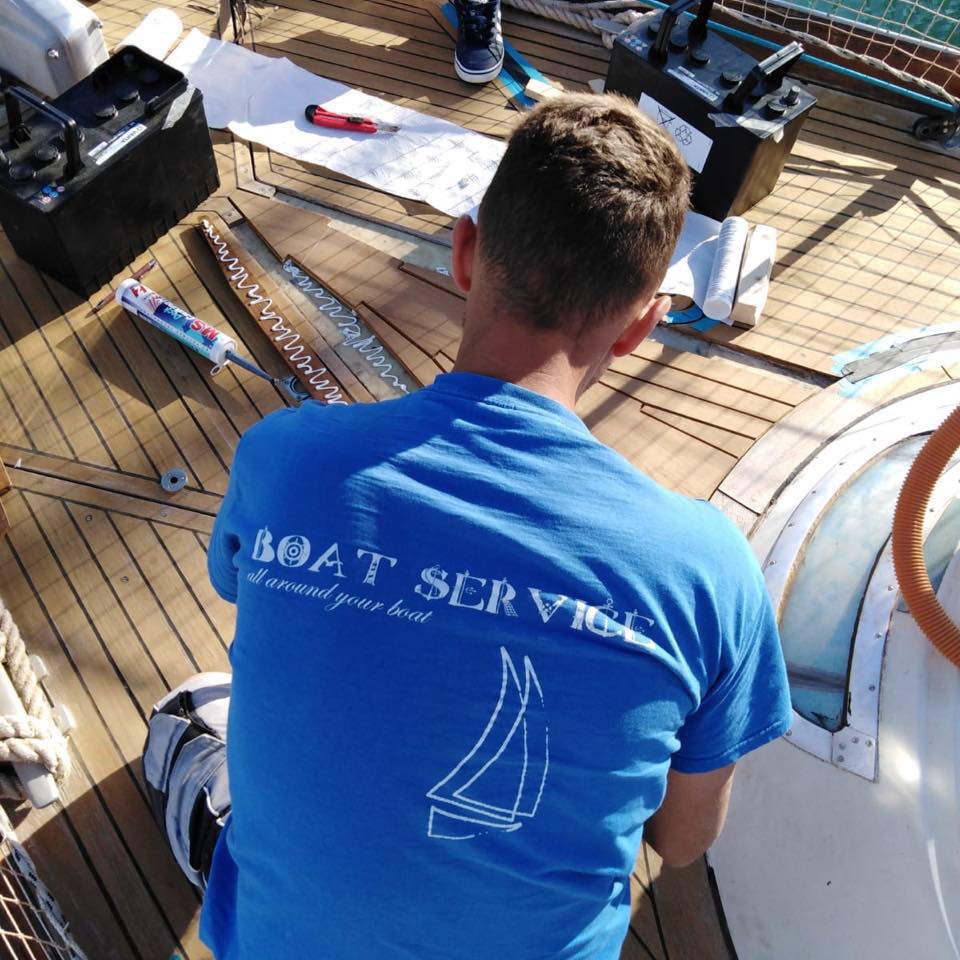
Here we do the very delicate preparation before applying the sealant. This is a long step with no shortcut.
This is our best moment, when we deliver a work we’re proud of, and moreover when we see the look in the eyes of the happy owner.
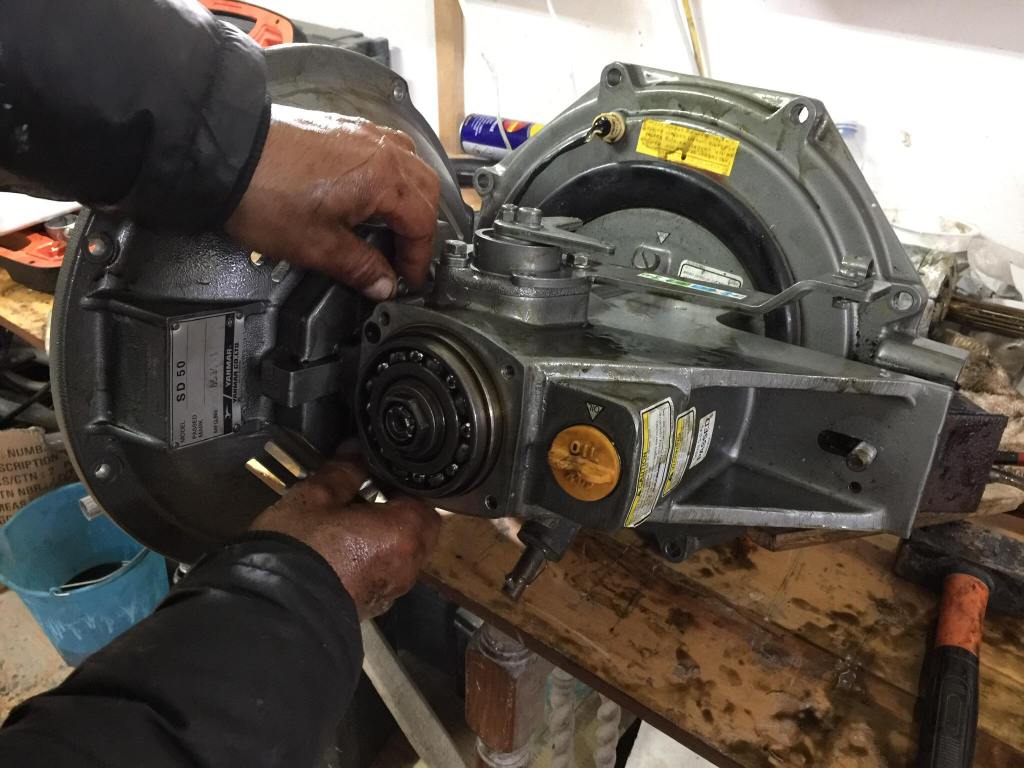
When asked to perform the annual engine revision of this Lagoon 450F, we encountered traces of water mixed with the sail drive oil. A definitive sign that there has been a leak somewhere. The boat owner told us he’d caught fishing lines around the sail drive a couple of times that summer, so we ran some tests with new oil.
After a couple weeks when the boat sailed to and back from the Egadi islands, the water was back inside the shaft, and we knew the seal needed to be changed.
On top of this, the owner shared with us the fact that he had to change the cone shifter on this engine every three years on average since the boat was leached in 2011. A definitive sign that something was wrong in this sail drive, and we were going to look after it.
At this time, the engine’s hours read 2400h on starboard, and 2397h on port side.
We worked with Rafik on this project. With over 20 years of experience, Rafik has been working on fishing boats with engines his age as well as on recent sailing and motor boats engines. He would usually get the hint on the problem by the sound of it. If not by the sound, by the smell of it.
Here in Licata, we like to think of Rafik as the engine’s whisperer 🙂
Nonetheless we downloaded the SD50 Operating Manual on our tablet to make sure we had any information handy while working the unit.
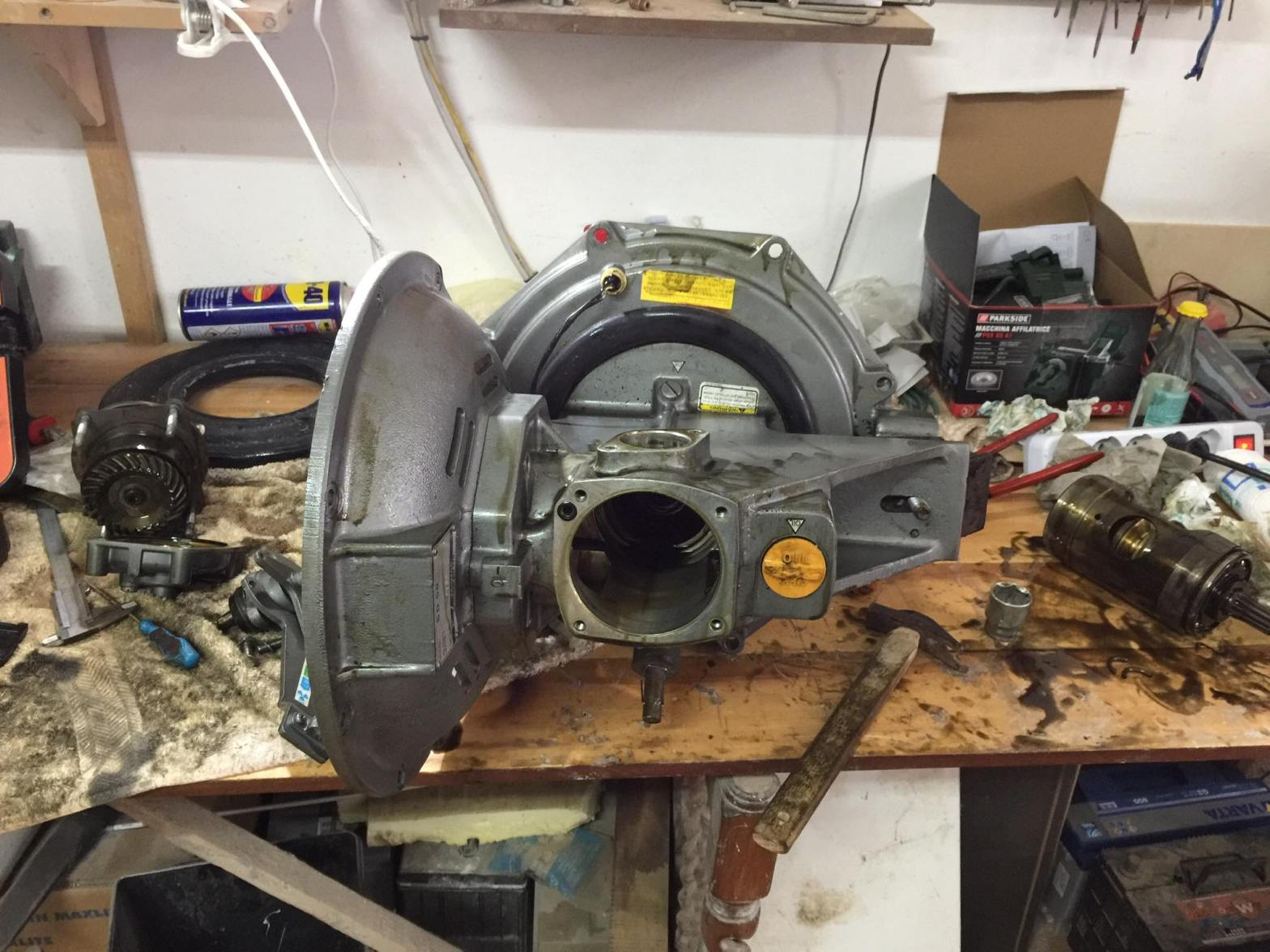
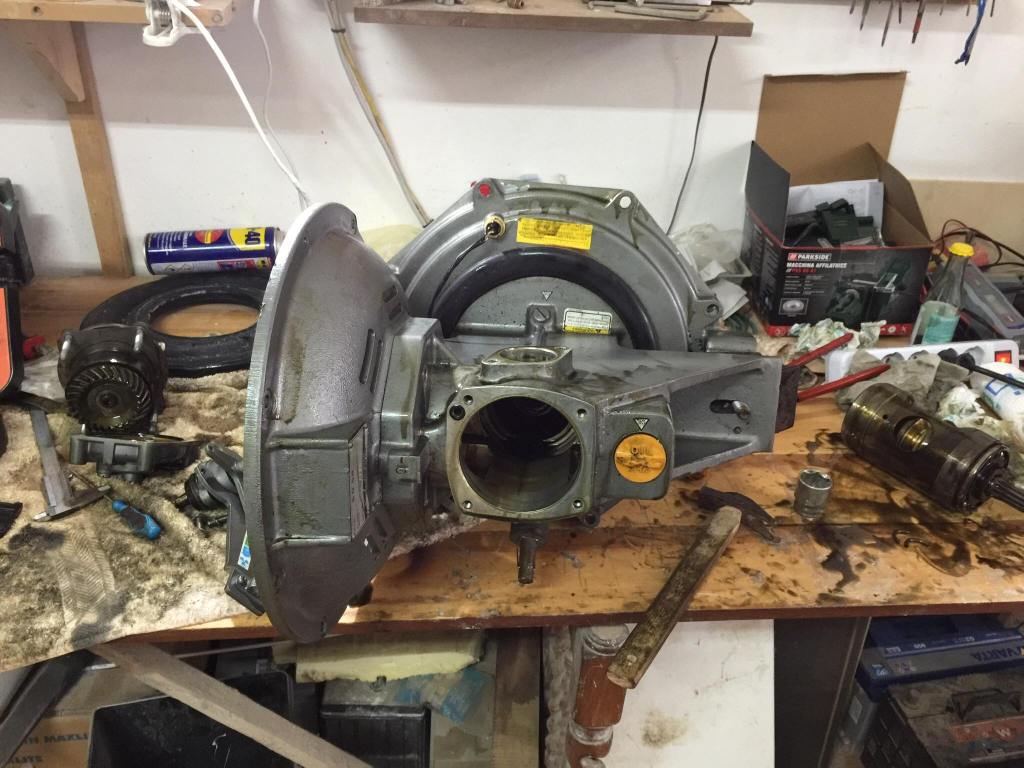
Although he does talk and cagole them, in this instance it started with dismounting the sail drive, and taking it to the workshop.
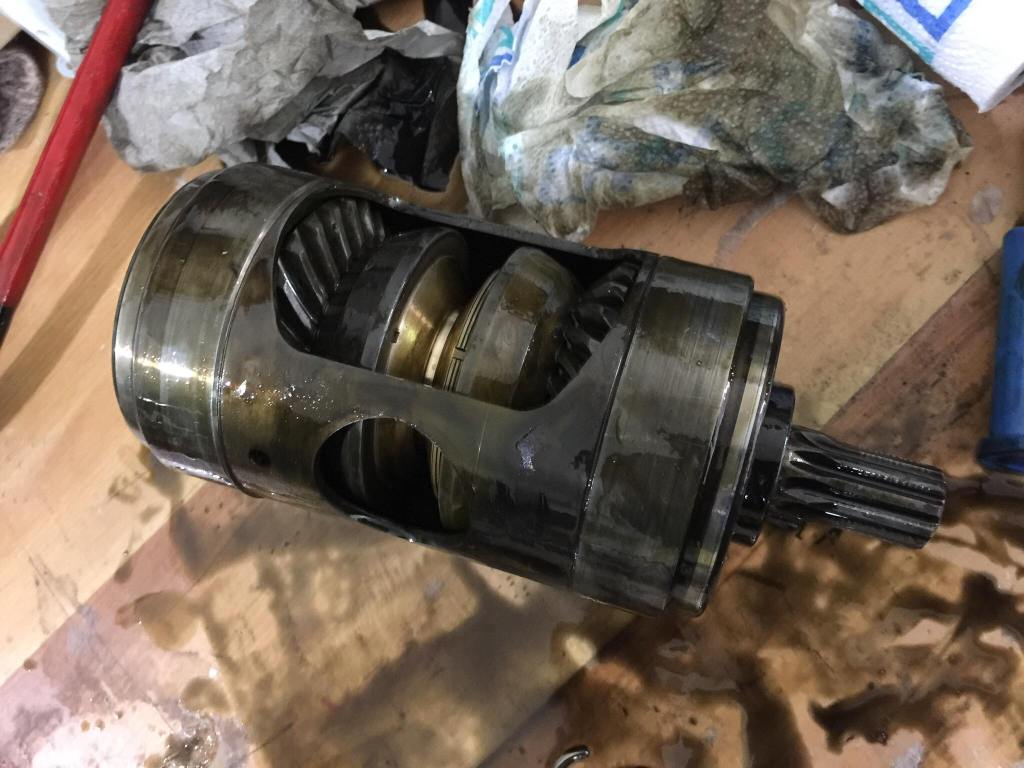
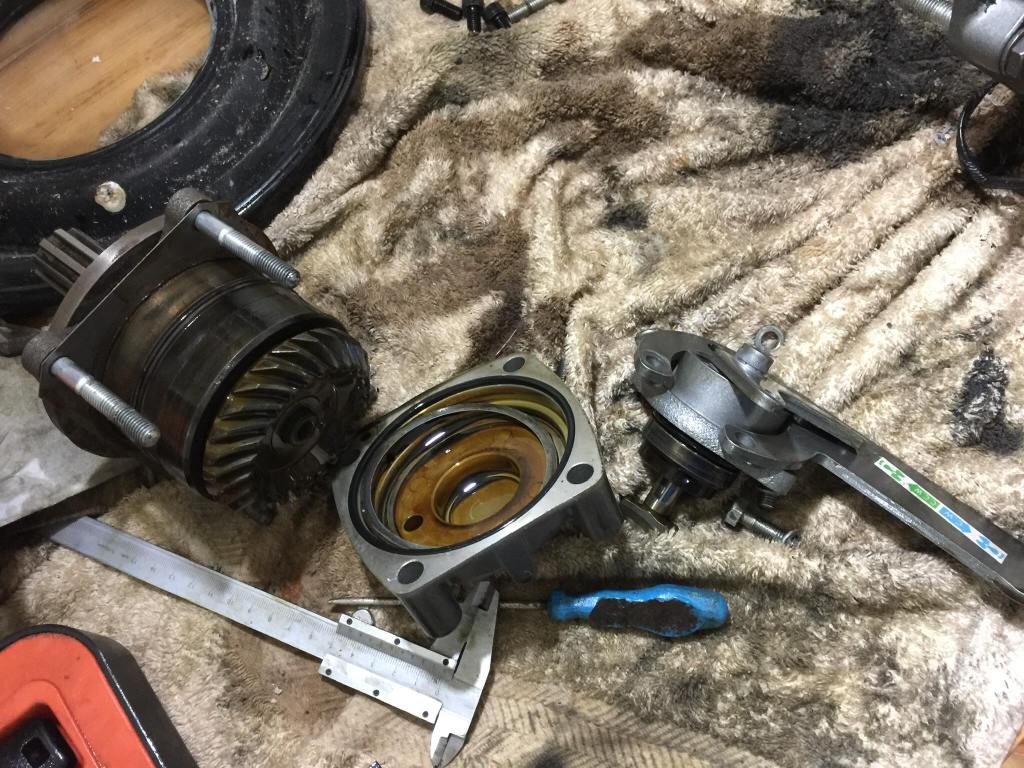
After dismounting it to its last bit, we did find out the cone shifter wasn’t set correctly, inducing an over than usual wear.
We took this opportunity to check and clean every other part of the sail drive, as stripping them down isn’t a job which is performed this often. We didn’t notice any other issue.
After cleaning everything and changing the seal, we were able to remount the sail drive and proudly set it back in its rightful place.
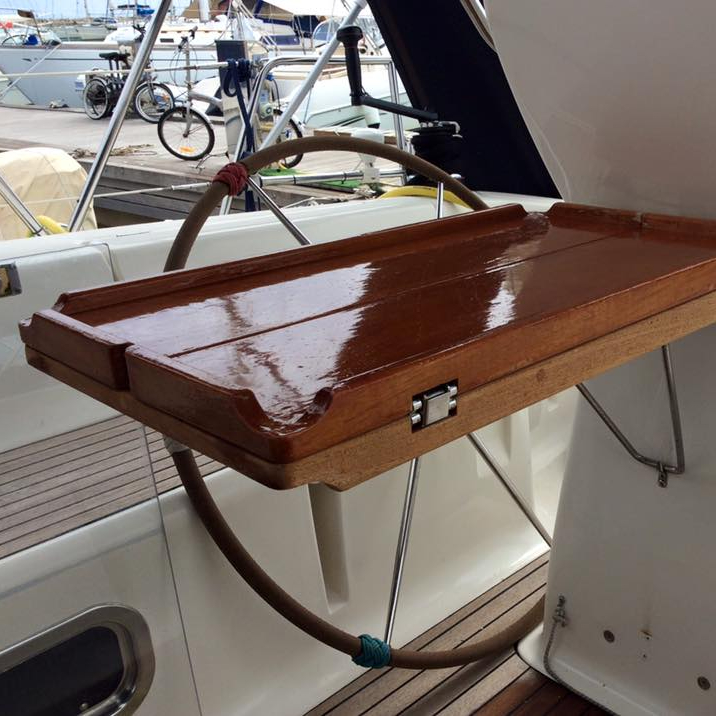
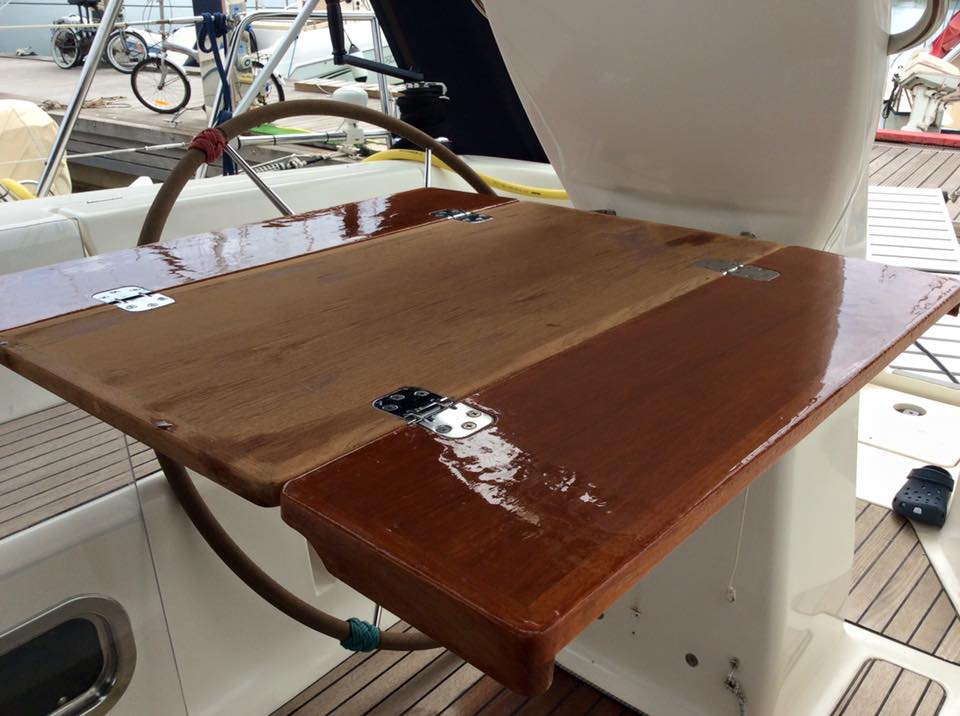
This sailing boat had an articulated teak cockpit table too small to be used for al-fresco meals.
The owner came to us, asking if we could replace the table. After a while, we came back to him with a smart solution which would save the existing table.
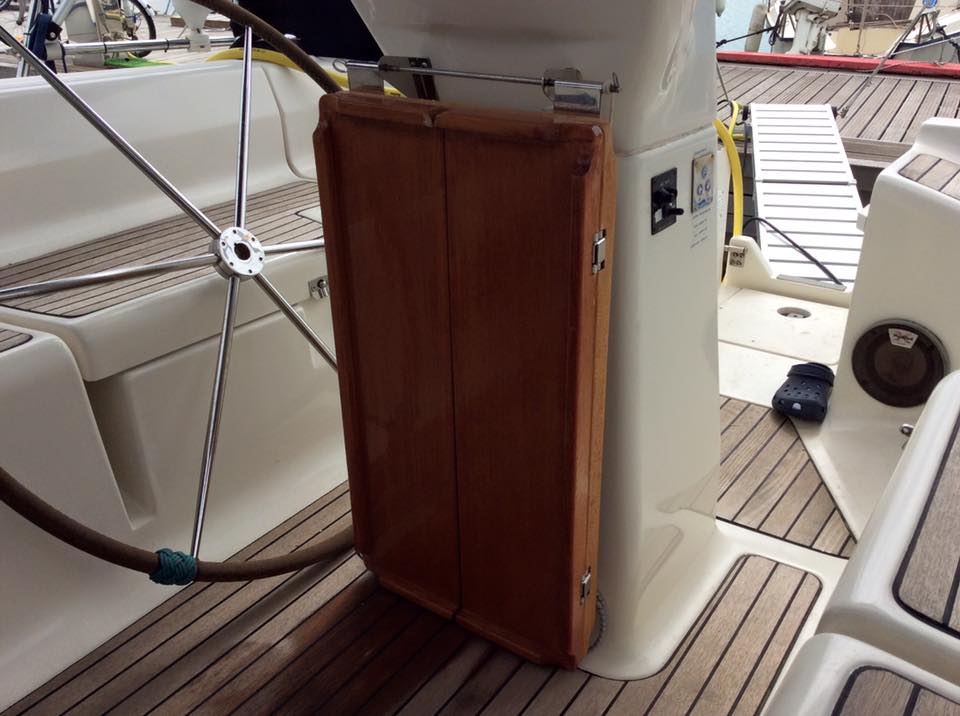
Needless to say everyone was happy with the result, both saving the existing table and adding a lot of practicality to the enlarged table … all of which without cluttering the limited space of the cockpit.
What made this project particularly a success is the way you can hardly notice the table has been extended when it is folded in the cockpit.
One client came to us with a very ugly gelcoat dent in the bow of one of his hulls. He was really shocked because he believed this would make a definitive mark on his boat.
After quite a few hours of work, we were able to make it go. We were particularly proud of the white color we could adjust to perfectly match the existing nuance.





 boatservicelicata.com